Blog

Procrastinating

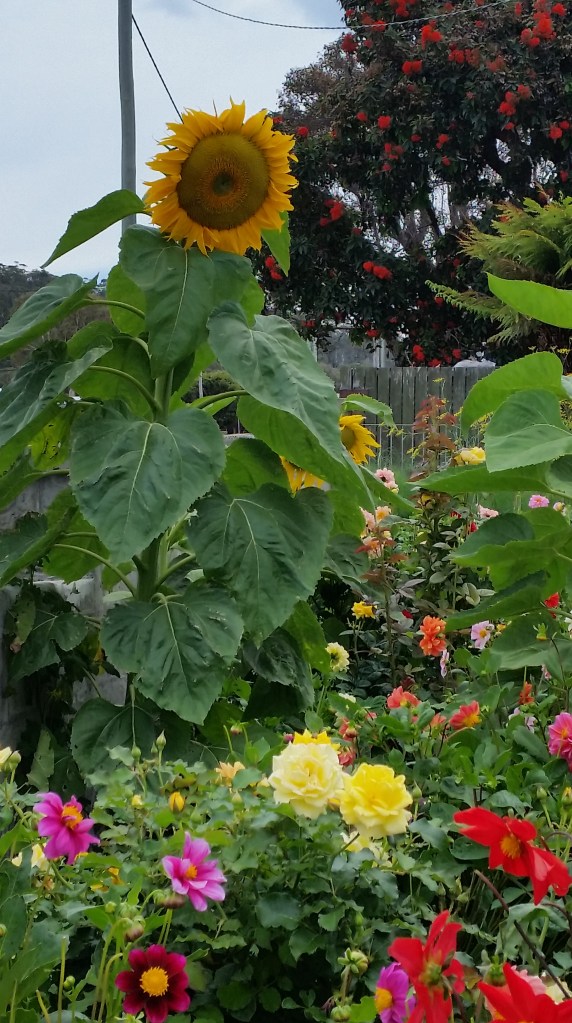
20170309_155350

That difficult second book.  Yikes.

It’s a phrase that has been rattling around in my head.  I’ve sometimes heard other people muttering about it, and in fact the current Victorian Writer magazine (Jun-Jul 18) has a great article about all of those misgivings and expectations that follow a first book.  Kate Mildenhall’s article, Finding Home, touches on many of the thoughts that rattle around in the writer’s brain.  Self-doubt.  Crippling expectations.  Thinking everything you write should go straight into the shredder.

All these insecurities undermine the entire creative process and become a ball and chain that you keep dragging around the house.

When I’m not writing, I often wonder why I’m avoiding it, especally on those days that I’ve set aside specific time and told people that I won’t be checking my phone, or watching anything on Youtube, however cute or amusing.  So don’t bother sending me the link.  Really.  Don’t.

I’ve filled the fridge.  I’m ready.  It’s raining like the second flood is coming, and I have nowhere I need to be.  But.  BUT.  There’s still an endless list of things that seem to be more pressing.  Like a buzzard, I circle the desk, but just can’t find a way to land.  So I go and make some more tea, return to my chair, line-up everything into nice geometrically precise patterns, put on a load of washing.  Then there’s that fluffy jumper I always like to wear when I write in winter.  I have to find it, and put it on.   As if the words are somehow  stored within the wool, and will miraculously fall out onto the screen when I wear it.

Writing has enabled me to master the art of procrastination, becoming entangled in all sorts of urgent household tasks, errands, or administration that just can’t wait.  (Even taking the time to air these thoughts about the evils of housework is a subtle form of avoidance.)

If I could just get something down in black and white I would feel like less of a fraud.  But why is that?  Does a tennis player doubt his ability because he didn’t hit a few balls today?  He doesn’t lose his skill overnight.  It has been a cumulative process; years of training.  Taking a day off doesn’t mean they have to give back all their trophies.

Yet, if you talk to most writers, it’s a common theme.  I can only call myself a writer if I’m writing.  My self worth relates directly to the amount of words I successfully lasso and wrestle onto the page every day.

Anyway, I’m off to make dinner now, and then catch-up on some tv shows for the evening.   And if anyone asks me why I’m not writing, I have the age-old fallback.  I’m too busy at the moment.  I’m washing my hair.

Accidental cyclist

bike-pic-jpeg-2

If I’m honest, I have a sense of foreboding from the outset.

Forebodingnoun – an expectation of trouble or evil; a presage or omen.

Perhaps it’s because some joker has decided to make it Easter Sunday and April 1st on the same day. Plus there’s the issue of daylight saving overnight. We had to save an hour, but which one? And can we really trust any advice about that on April Fools Day?

Hang on, there’s a phrase that’s meant to help you remember – Spring forward, fall back.  No, wait, maybe it was Spring back, fall forward? They both work, don’t they?  Aaaaarhh.

Really, it’s the perfect day for a bike ride.  Breathe.  Ignore the stirring in the guts.  I have nowhere to be, and I’m setting out just after 10am, with the usual provisions. Water, check.  Cycle maps, yes.  Picnic lunch, definitely.  Plenty of time to get onto the Main Yarra Trail from South Yarra, and just mosey along for a few hours.  I always get the train back to the city, from one of the stations near the end of the line, so it means I only need to ride in one direction.

The track follows the banks of the Yarra River as it curves in a north easterly direction from the city, and I’ve ridden it plenty of times before.  Despite it being a Sunday, and a public holiday,  I see the punt is operating for the short crossing at Herring Island – looking rather like the wooden floor of someone’s shed drifting from one side of the river to the other.  Not a bad way to earn a few dollars.  I assume the guy doesn’t need the obligatory Sunday morning lie-in.

I take a right turn to head east for the start of my journey.  Pedalling towards Burnley, along winding pathways, then teetering across MacRobertson Bridge, above the Citylink traffic, on the narrow concrete pavement adjacent to the surge of commuting cars, before winding back around to the river trail again.  Glancing back at the raging vehicles threading back and forward in the freeway contraflow beneath us; glad of the space, and the air opening up around me.

Passing the college boat sheds  (closed – no long boats being carried across the track today), eyeing the tennis courts and boat ramps of houses on the far banks, where the deleriously rich and privileged live in their expensive mansions.  Falling through cool shadows as the track scoops under road bridges, feeling the wind snatch at my hair and clothes as I rush through it.  There’s a scraggle of foliage overhead, peeling gum trees with their silvery skins, verdant banks, spindly grasses in brown clumps.  Then I’m chugging my bike down the steep gutters carved into the edges of concrete steps – so much easier than having to bump the bike down the sheer stairways that descend to the next section of the pathway.

There are swing bridges to negotiate, the satisfying percussion of rattling wooden slats as my wheels clatter across, and the expansive views of the river passing far below, my constant on this ride.  There’s the thickness of the air, humidity held by the cloud-cover pouting overhead, a sulky sky that refuses to move on.

Surfaced, asphalt tracks occasionally give way to gravel.  I pass the Children’s Farm at Collingwood (ignored by the goats and horses grazing just beyond wire fences), its iconic metal windmill spinning and swivelling in the wind, blades like long petals, stark against the white sky.

A huge green belt is opening up as I continue east, where parkland and golf courses are sandwiched between Yarra Bend at the bottom, and Fairfield at the top. It’s the place to hire a boat and row down the river – from the Studley Park or the Fairfield Boathouse –  or alternatively, for the more indolent at heart, to partake of a scone on the riverside deck.

There are a few heart-starting climbs, and some long dips downhill, where you can shift into low gear and swoop back down to the riverbanks again.  Looking back from a high vantage point, the city appears compacted, crammed into the narrow space formed by two gum trees that frame its highrise buildings. I take a photograph.

Kew is green, Ivanhoe unravels with buzz cut golf courses.  Lush, groomed.  Magpies share their complicated songs, ascending and descending scales, a freeform score, like panpipes emanating from the treetops.  I smile, and wonder what they might be talking about, what compels such melodic declarations.

Somewhere between there and Heidelberg I stop to have my sandwich.  There have been regular signs telling me to Beware of Snakes, and I check the long grass around my wooden seat before I dine off track.  The autumn colours of a snoozing Tiger snake would look very similar to fallen branches or dropped tendrils of bark, and would blend seamlessly with the scattered leaf litter.

I try to share my provisions with a team of ants hustling through the undergrowth beneath my bench.  They ignore tomato, and have no partiality for bread, but a sliver of turkey gets some pause, and a second look. They seem busy with other things though, putting right the ways of the ant world, and generally stampeding around as if someone told them to get to Aldi for the ‘specials’ on offer today.

I’d planned to head for Eltham, but for a few minutes I linger indecisively at a fork in the track, considering whether I should take the Plenty River Path instead, towards Greensborough.  I haven’t done it before.

I get an echo of that uneasy feeling again.  I should stick to my known route.  So I push on, heading to Westerfolds Park, with more steady climbs through open woodland, leading up to the Mia Mia Cafe, if it’s open today.  When I get there, I find it’s gone, and the heritage house in which it operated, which used to showcase Aboriginal art, is also empty.  No afternoon tea for me today.  Not yet anyway.  My thirst nudges me gently.  But I take some water and shelve the idea of caffeine for the moment.

I descend from the park’s elevated heights, down again, towards Pettys Orchard, somehow missing a left turn.  I’m on boardwalks for a while, under more dense foliage, and it doesn’t feel familiar.  I ask a jogger, get directions from some dog walkers. They all have different ideas, but they all agree.  There’s no signage for the Diamond Creek Path.  Really?  That was my missed turn, I tell them.  No wonder I didn’t see it.  I check the time. Still plenty of daylight left.

Retracing my steps adds a few more kilometers to my anticipated 50km trek, and I feel the ache starting to spread through my tired leg muscles, standing up in the pedals to unfurl from my riding crouch. It has been a long ride so far.

When I find the concealed junction, my bike map indicates a further 5-6km to Eltham, and as I head along the final meandering stretch, I’m looking forward to a break from the saddle.  Just above the tree tops, I start to see the overhead cables for the trains, and know I’m near the station.  With any luck there’ll be a cafe somewhere.

Fortunately, there’s an entire cafe strip one street back, running parallel with the road infront of the station, and they’re all open, rich with flaky pastries, fruit topped cheesecakes and sugary cookies in glass jars.  I linger with a pot of tea on an outside terrace, and extol the virtues of two wheels to adjacent diners supping at the next table. We compare notes, we feel happy to be alive.  But there are trains to be caught and baths to be soaked in.  I take my leave.

Having wheeled my weary torso through the underpass to the platform, I’m ready to board the next train and enjoy the passing scenery.  Signs loom large as I approach the ticket office, filled with bold declarations about line works.  There have been adverts about it for weeks, I’m told, with a jocular sort of dismissiveness.  The trains will be terminating at Greensborough.  But isn’t that just two stops?  No problem, miss, they have connecting buses running from there to Clifton Hill.  (That’s close to the city.  What a relief. )

Oh, you can’t get on with the bike though.  They don’t take bikes?  I ask about exceptions.  I implore.  Isn’t there a luggage area, wheelchair space?  I explain my 50km trek so far.  I’ve been riding all day.   I couldn’t possibly initiate another turn of the chain.  I’m done. It’ll be dark in a couple of hours, thanks to daylight savings.  Won’t they bend the rules for a damsel in distress?  Don’t they care about my safety and wellbeing?  Customer Service?  Would it help if I beg?  (I’m too dishevelled to worry about my dignity now.)

Nothing works.  I cry, Foul.  I’ve been handballed by The Metro.  Dumped in the suburbs.  Reprimanded for my shameful ignorance about the operation of the Hurstbridge line.

There it is, my guts say, with a lurch, and a certain I-told-you-so.  Or at least they would, if they had a voice, which they don’t, because that would be weird.  Somehow my subconscious was ahead of me with that twist of intuition this morning, that prod to the solar plexus, infering this was all a bad idea.   Do something else, it said.  Go another day.  Choose another route.  Did I listen?

No, I had to choose a public holiday, weekend timetable, Easter Sunday, daylight-saving-affected April Fools Day, to a far distant place with no train service, for my marathon bike ride.

Disgorged from the train at Greensborough after my six minute ride from Eltham, I eye the buses lined up outside the station, and consider making a dash for it.  I have a bike lock.  I could chain myself to a bus seat.  I could refuse to get off until we reach the city.  Fanciful at best.  I know what has to be done.  I can already feel the adrenaline coursing through my blood.

Any chance of a map? I ask.

I’m not exaggerating when I say I have no idea where the city is from here.  I don’t have any reference points.  This is not an area I’ve driven through, past or around.  I get here by bike.  I travel on bike paths.   In terms of distance I’m told it’s Quite far, A long way, and, About 20km.  (The latter being a phrase that continues to haunt me, given each time I stop to refresh my directons, I’m told that it’s still About 20km.)

More than one person suggests Google maps – and expresses incredulity that I generally prefer the large dimensions and commonsense papery reliability of my Melway, which I keep in my car.  Have they ever even ridden a bike?   My hands are full enough already.  I try to explain the dilemmas of operating a mobile and juggling reading glasses whilst riding in hurtling freeway traffic (Oh, it’s only 80 there, miss), in an unfamiliar area after the hours of darkness.  Well, at the very least, in the increasing fluff of gloom as the light fades.   I would like to get home alive.

Various things happen at this point.  I suddenly (gratefully) get second wind.  My homing instinct kicks in.  I realise that there are fewer and fewer people on the streets as dusk falls, and increasing traffic, hence more difficult to get ongoing directions.  I quietly bless the pizza shop proprietor, Wayne, who shows concern, and kindly provides instructions, gives me his phone number, and suggests one of his youthful drivers will come and get me later, if I lose my way in the sprawling outskirts.  After they close, of course.  They knock off at 10.30pm.

I ride like a mad thing on long, endless roads with blue numbers on them, like 44 and 46, dual carriageways that feel like highways. Dual carriageways that are highways.  Don’t look back, I tell myself.  Keep your nerve, as four wheel drivers graze past me.

Rosanna Road,  Lower Heidelberg Road, plenty of crazed pedalling.  But it’s Heidelberg Road that finally sweeps me towards Clifton Hill.  I recognise the edge of Fairfield Park on my left, and a cyclist assures me I’m almost there.  Oh Thank God, I breathe, his face surprised by my fervour for train stations.

It’s dark.  I see the platform lights.  I’m beyond tired, ridiculously filthy, deleriously relieved.   The rest is a blur.  The train clattering towards the city lights.  Changing to the bayside line that chugs me all the way home.  Yes, home.  It’s almost 9pm.

There are people who cycle Round the Bay in a Day, considerably further than my 80 km (and then some) journey today, but they train for that; and they generally know what they’ve signed up for.  With my bike in the shed, I contemplate my gear, disgorged into a dusty pile on the kitchen floor, and wonder whether to wash or burn my clothes.   But before I do anything, there’s a phone call I need to make.

I call Wayne at the pizza shop.  Oh, we were just talking about you, he says.  We wondered if you made it home.

Yes, I did, I say.   I did.  I did.  I’ve just got home.

And I click my heels.  Because there’s no place quite like it.

Creating habits

Writing makes me feel good. It’s that simple.

When I’m immersed in a world of words and phrases, I’m in my happy place.  I feel elated when I can express how I feel, articulate an idea, nail a description.  Words just make life better.

Receiving recognition from my peers is an added bonus, and something that, I confess, will always make me a little moist eyed.  So, when I read the current (Feb-Mar 2018) issue of The Victorian Writer featuring my article about plunging into the writing lifestyle in 2016, it was no surprise that the text seemed a little blurry.

A screen shot isn’t easy reading, so here it is, in its entirety: –

It’s Never Too Late.

I did a random Google search today entitled, life after writing your first book. Succinct and self-explanatory; it’s exactly where I’m at right now.

Amongst other things, the search came up with an article from the UK newspaper, The Telegraph (28 Feb 2017) by Saffron Alexander: ‘The authors who prove it’s never too late to write a book.’ It outlined a network of men and women whose debut novels were published when they were over the age of 40. The group have named themselves, The Prime Writers, not only to celebrate their collective life experiences and their novels, but to inspire other writers in their prime to complete that novel, and get it published.

The story resonated with me as it would for other late developers, people with busy lives, or those of us who may have started to think it’s too late to begin a writing career.

Like many writers my output has been limited by the constraints of a day job, but I’ve had that ‘manuscript under the bed’ for more than a couple of decades, certain that one day I’d find the time to take it to the next level. In a gap between jobs in January 2016, I finally had that opportunity. The certainty that this was the right time came after the first month of rewriting. There was a shift as something clicked, ideas aligned, and there I was falling down the rabbit hole.   I really could do this. At last. It was the moment I’d been waiting for.

But what about income?   I’d always worked full-time and earned a decent wage. How on earth would I cope without a regular salary?

There’s no need to panic, I told myself, thinking about the abundance of free Wi-Fi, and the comfortable (ie: heated) surrounds of the local library. Plus there are the petrol-sparing joys of a pushbike.   Life would be lean, but surely I would cope?

So, I stepped off the nine-to-five merry-go-round, and turned my life upside down. I found weekend work. I didn’t have to drive through peak hour traffic. I was deliriously happy.

I thought I’d write for six months, but it ended up being twelve.

At the outset I’d made the resolution that I wasn’t going to languish in anyone’s slush pile, or endure the endless ping-pong of corrections and rewrites.   There would undoubtedly be a surfeit of critics and editors who would be pleased to disembowel my manuscript and tell me all the reasons it didn’t work, that they didn’t like it, or that it lacked the requisite plot points. But I don’t have that sort of time to waste, and there really is no pleasing some people.

So, I self-published. I chose the most cost-effective option for a large (456 page) colour book, which was the US based POD service, Ingram Spark.   The Titanic of printing, I’m led to believe, and notwithstanding their stress-and-angst-inducing file stipulations, they offer a quality service.

I got that print book in my hand in February 2017 and I almost wept, except I was too busy leaping over furniture and texting all my friends. It is pertinent to give-in to joy when it arises. That is why so many people have written odes to it.

Now, no-one expects to be facilitated, or in my case self-propelled, into the stratosphere after their first book. I’m wearing my reality-check hat for that one. I don’t expect to be lauded, applauded or even rewarded in financial terms. No, I’m not watching my bank account grow, and in fact everyone else seems to make a great deal more money than I do in this venture when you weigh-up the actual profit margin and the expected royalties. So I won’t be resting on my laurels, nor will I be appearing on Graham Norton’s show anytime soon. Although if you are reading, Graham, please seek me out on Facebook whenever you’re ready.

However, there is ultimately a rather unexpected consequence of this year long mission.   What follows all of the above is the difficulty of relinquishing a habit. I’m an addict now. My name is Angela, and I’m… A Writer. It isn’t easy to quit. I’ve had a year of feeding my habit, and already the withdrawal symptoms are manifesting. Rashes, itching, a general abhorrence of facing the corporate world again, with all of its homogenised floor plans, air conditioning and beige partitions.

Nobody talks about the difficulty of reaching this juncture. They don’t say anything about how to handle your inner scribbler once it has been let out of the box. It’s not just about deciding if you want to live on love alone, for that of course is why writers write. For love. Not money. All those writing muscles have been developed as a result of your discipline and persistence, and income has never had anything do with it.

It’s about addiction, wanting to satisfy your inner author, and giving in to the hunger.

The experience has been like unpacking one of those DIY IKEA furniture kits, and finding that you can’t dismantle it and fit it all back into the packaging again. Somehow it has become larger than it was when you started.

Yes, there could be a second book. There could very well be a whole series, but that’s not the point. When I started this I didn’t have a five year plan or anything. There was no career defining moment.   It was a seat of the pants decision.   Write full time (for nothing), and then go back to the comforts of a normal work schedule (for money) that permits a return to the casual but stealthy jottings on the backs of menus, receipts and ticket stubs.   Yet, in my heart I’ve always known it would feel like a burger instead of a steak.

I didn’t expect this, but I feel transformed. Reinvented. Perhaps I don’t want to find my way out of the rabbit hole yet. I’ve become an accidental writer, not someone who does some writing in their spare time. It’s tantalising, the idea of continuing. I just have to earn enough money for food, avoid recreational shopping, and keep that bike chain oiled.   I can do that.

I’m old fashioned, which goes without saying given I’m a Prime Writer. I love the smell of paper, especially when it’s covered with all my own words. Quite an addictive aroma.

The Hero’s Journey has long been a standard guide for storytelling, based on the work of the mythologist, Joseph Campbell.  The call to adventure launches the main character out of their ordinary world.  There are mentors and threshold guardians, there are tests and trials.  Ultimately we all have to come back to the ordinary world from whence we came, but we return with our experiences of another world, and if we’re lucky, in this analogy, a book deal.  I’m not looking for overnight success.  But I’d like to do some more furniture leaping.

I still have plenty of marketing to complete, but after that I’d like to think I can continue to feed my habit, just for a few more months. Whenever you’re trying to quit an addiction they say you have to fail a few times, right? So it’ll be hard to fight the cravings. Ultimately, I’ll let you know if I take another call to adventure, and whether I return with the elixir.

9. Dilston


20180201_104130

On my last day, I took the A8, the East Tamar Highway out of Launceston, towards the fruit growing region of Dilston.  On my left, the Tamar River followed my course as I headed north on a bright, clear morning, towards the sprawling orchards.

I could sense I was approaching it, and pulled over to take a photograph; but I couldn’t really say I had any recollection of the view. It just felt familiar.

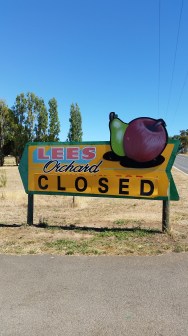
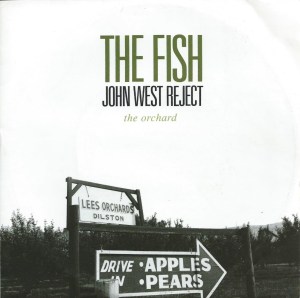
The sign has changed since the days the band depicted it on their 7″ single, The Orchard.  Plus there are new orchards now, heavy with ripened cherries and other fruits.  If Lees had been open I would have bought some fruit, but as it was, I was only able to take a few photographs.

The return drive towards Invermay is close to the river’s edge, where the blackberry bushes grow wild in the sunshine, and the river boats cruise by, heading towards the Seaport.

My distant memories of Dilston are of walking the darkened orchard at night, amongst the fallen apples, close to Mark’s house. It’s a beautiful spot – I’d forgotten it was 14km from the centre of Launceston – a long return drive to the Nurses Home on those dark evenings, when I lived and worked at the hospital.

Memory can change everything.  I’m so glad that I wrote it all down in the days after I left.  My love for Tasmania, and for my friends who live there now will never diminish.  That’s why I wrote a book about it.

20180201_104811

The Orchard single cover 001


8. Walking to Duck Reach

20180131_130910

Technically, if you have a spare 90 minutes, you can do this return walk from The Gorge.

The guidebooks tell you this; but surely that’s only if you walk it without a camera, and possibly with your eyes closed for the entire trek.

The track follows the course of the South Esk River from the First Basin area to the historic site of the Duck Reach power station.  There’s a sign close to the suspension bridge in The Gorge, indicating the way.  When we used to do this walk, there were few signs or safety fences, and no viewing platforms from where you could see the water meandering across the rock strewn curves of the riverbed.

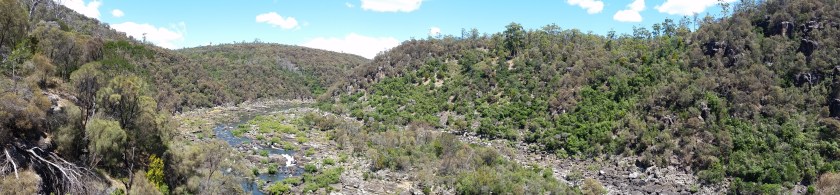
The disused buildings and old pipeline of the power station are now the site of a modest museum, and after crossing the suspension bridge, I only had a short climb to the spot above the station, from where there is an incredible panorama.

One (of the many) things I love about Tasmania is the opportunity for solitude.  There are places here where you can feel at one with the earth, where you can stand alone in the sunshine, under a vaulting blue sky, and listen to the cicadas thrumming their resonant casings like tiny instruments.  You can feel each of your senses individually, marvelling at the richness of the colours around you; listening to the soft layers of sound formed by the white noise of tumbling waters, the turning page of soft wind surges, the bird calls and humming bees;  the heat held in the air, pressing down on you, the dampness of perspiration in your shirt, the scourge of thirst at the back of your throat.

It’s transcendent; a reminder of the slightness of our being, measured against the perpetuity and determination of nature’s germination, pollination and proliferation.

It will outlast all of us.

7. Cataract Gorge

20180131_180242

Water is at the very heart of Launceston.

The city’s nestled at the meeting of two rivers  – the North and South Esk Rivers –  as they merge into the expansive, and tidal, Tamar River.  If you followed the Tamar northwards from this confluence of waters, you would finally emerge at the estuary, where it meets the sea – with Greens Beach (and my friends’ lovely beach shack) on the western headland, and Low Head on the east. 

It was founded around 1806, and I’ve always thought that they embraced its best features when it was established at the head of the Tamar River Valley.  It really needs no fanfare to showcase its natural wilderness and inherent beauty.  All you need is a pair of eyes, and some good walking shoes.

A meandering boardwalk to the Seaport Precinct leads to a variety of cafes with a perfect view of the water; there are walking tracks through bird filled wetlands to the 7 hectare Tamar Island;  plus there are various options to take one of the river cruises along the Tamar, to rest your feet for a while, and have a scone or two.

But it’s the Cataract Gorge Reserve that is truly sensational. All 158 hectares of it.

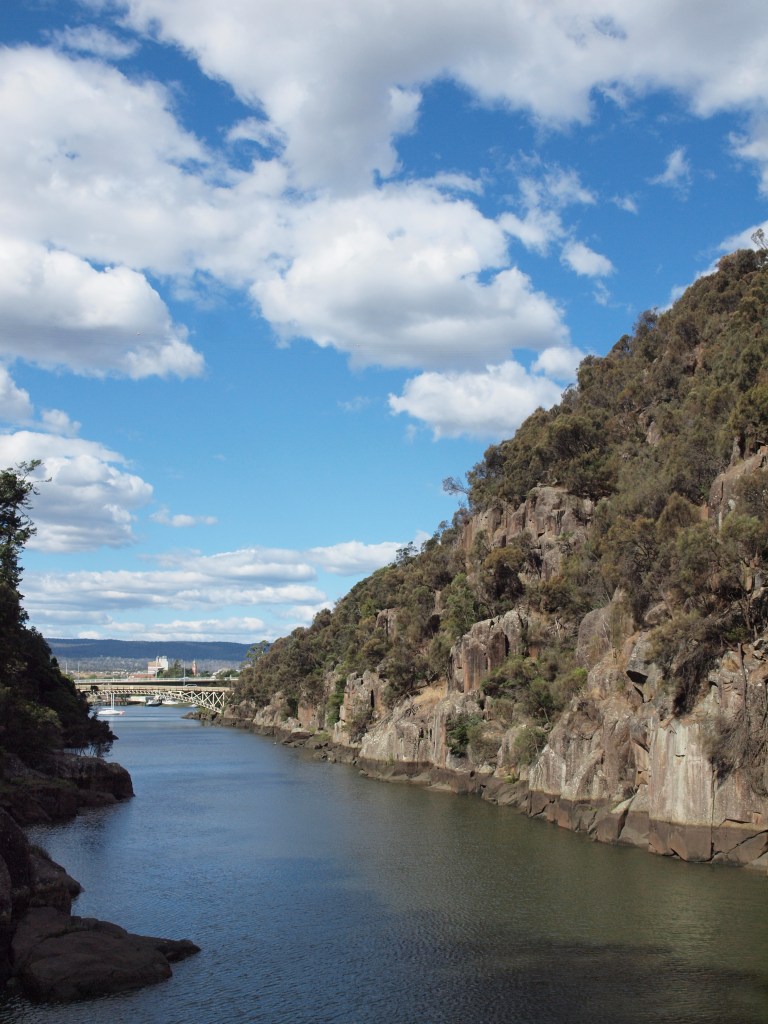
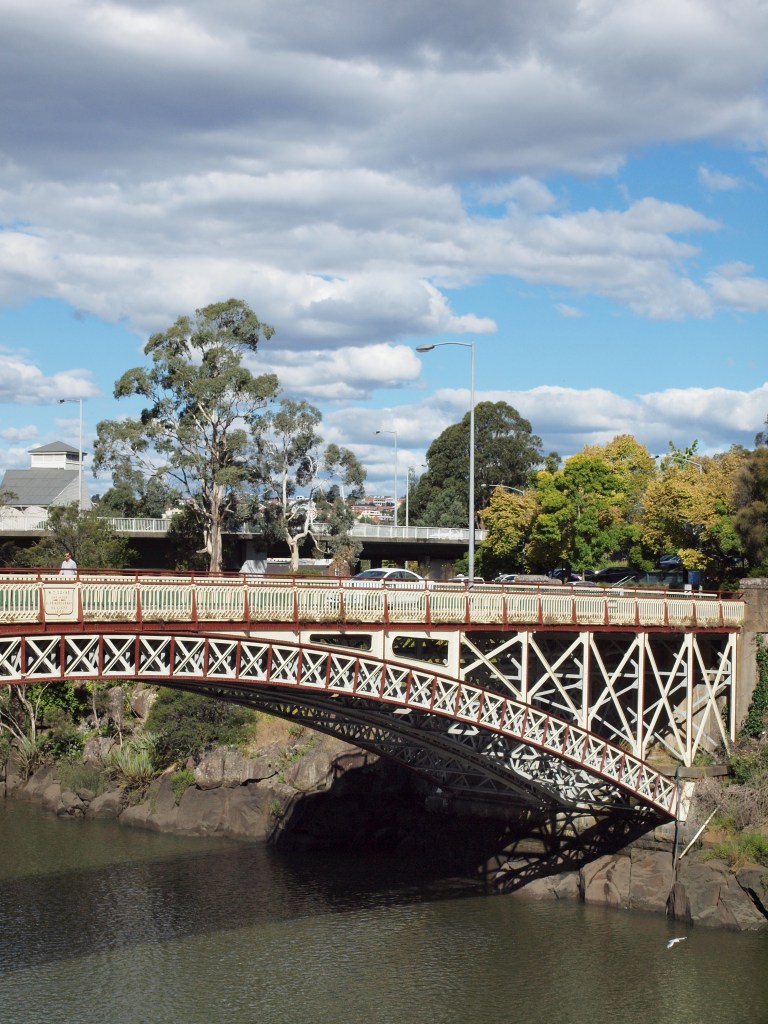
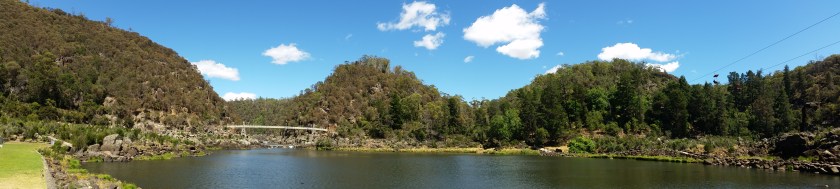
West of the city, only 15 mins walk from the centre of town, you can behold towering sandstone cliffs, heavy boulders, and sheer, vertical drops to the rock-strewn South Esk river below.  The zig-zag track follows the south cliffside, and is a steep climb that rises steadily and cuts a trail above the vast slabs of sandstone, scattered with bristly scrub and Eucalypts.  If you turn and look back towards Launceston, you’ll see the view of the Tamar and the distant Seaport(above).  The lovely Kings Bridge can be seen (shown below) from the other bank of the Gorge,  on the much lower Cataract Walk – which is a sealed and relatively flat track that meanders around to the gardens – connecting to the other bank via the Alexandra Suspension Bridge.  Another book reference?  Yes, the latter pathway is the one that Dave and I chose, when we had our midnight ride to the Gorge, and he invented underwater cycling. 

It’s easy to spend a day taking in the expansive views, hiking the dusty trails within the Reserve, riding the chairlift, and wallowing in the waters of the First Basin (if you can brave the fathomless cold waters, and the elusive eels – I’ve never seen one), or the adjacent swimming pool (if you’re less of a thrill seeker). 

Peacocks still roam the gardens, shrilling their distinctive call – tay-oooool – and hovering around the cafe tables, ready to snatch your sandwich whenever you aren’t paying attention.  On those warm Saturday afternoons, many years ago, when we used to take our towels to the First Basin and spend a day at the pool, we used to mimic them whenever we heard the birds calling in the distance.  ‘Show us your tay-oooool…!’ we’d shout, laughing at the strange inflection of their chanting. 

I still smile whenever I hear them. 

OLYMPUS DIGITAL CAMERA
Looking back at Launceston, & Kings Bridge (from Cataract Walk)
OLYMPUS DIGITAL CAMERA
Kings Bridge


6. Launceston

20180131_121706

The ‘Garden City of Tasmania’, it said in my Lonely Planet Guidebook © 1986.

When I arrived in 1988, that book was my travel bible and survival kit, containing all sorts of useful tips about places to stay, eat and visit.  Back then, if you travelled from the airport to the centre of Launceston, it only cost $3 on the Redline bus.  You arrived via Ansett or Trans Australia Airlines (TAA) if you came by air from the mainland, or if you came by sea (to Devonport, an hour’s drive from Launceston), it was on the Abel Tasman ferry.

Of course, you could Google all of that information now, but you travelled by your wits in the 80’s.  You trusted your intuition, and each night, before you went to bed, you scanned your Lonely Planet so that you could plan an itinerary for the next morning.

There are different airlines now; but the ferry still runs across the Strait, renamed, and refurbished as The Spirit of Tasmania.  In fact, there are two vessels now, and they offer day sailings as well –  and not just the 14½ hour overnight crossing on a ship that used to boast a sauna, a pool and a disco (if you wanted to shake your stuff on the dancefloor all night).

Whenever I return, I always revisit the favourite places mentioned in Two Mexicans, to see how time has changed them.   I began a lovely walking tour around the centre of town one morning, first to Royal Park, where the Macaque monkey enclosure has been preserved – a different generation now for certain, but a lively and playful troupe.  Opposite the park, The Royal Oak Hotel offers beer from the local James Boag’s brewery, and an on-going live-music schedule as it did in the past, but this time I didn’t drop-in to sample either of them.

The fountain looks spectacular in Prince’s Square, the place where I once sat chatting to a boy and his band as the afternoon shadows lengthened.  Even the Jimmys sign remains on Charles Street, although now the supermarket is a Coles store.

Of course I took some time to visit the old Nurses Home, behind the new Hotel Charles, accessed via the steeply rising Frankland Street, on the corner of Charles Street.  The hotel (and its beautiful gardens) occupies the part of the old hospital building that housed the ICU, in the days when The General was in two halves, joined by a walkway above Charles Street.  Apart from occasional office use, the Nurses Home seems largely disused now; although, to my delight, I could see curtains made from the same vintage fabric (that hung in my bedroom in 1989) still bracketing the hatch window of my old first floor room.

As I retraced my steps into town again, I couldn’t really capture the perils of Balfour Street and its 1:3 stomach-lurching incline, but I clearly recall the horror of freefalling down it in Cecil whenever James was careening around in the silver Suzuki.  If you think you have nerves of steel, you should try driving down it someday.

I made sure I dropped into Petrarch’s Bookshop on Brisbane St whilst I was in Launceston, to thank them for selling my book, even though they were rather busy with a book signing that day.  Nigella Lawson was in the store, and the queue was a long way out of it –  so it wasn’t the best day to do any PR for my own book.   I’m thankful that they have my book in stock; and although I didn’t get chance to do the hard-sell, how many people can say they’ve been upstaged by Nigella Lawson? Perhaps I should’ve tried to flog her a book?

(You can see the walking tour photos on Facebook.)

5. Greens Beach & West Head

20180128_105448There are so many places in Tasmania that elicit a sense of awe and even reverence.
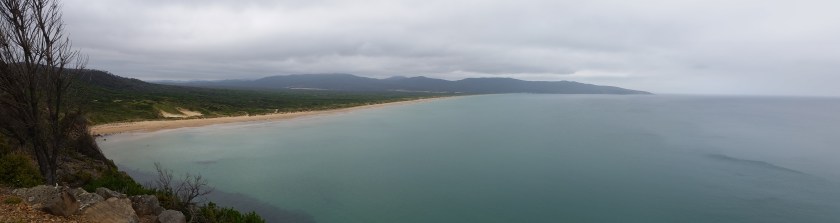
Views can render you speechless, colours seem saturated, often iridescent.  Perhaps it’s the clean air? True, I am unhesitating in my praise for the island that was once my home, and hence a little biased.  But I doubt anyone would fail to see its beauty.

Leaving Swansea on a humid and overcast morning, my journey was northwards, retracing my steps towards Launceston, and then onwards to the fishing resort of Greens Beach.  It lies on the north east shore of the island, overlooking the open mouth of the River Tamar where it finally meets the sea.  There, my friends have a lovely beach house on a street overlooking the ocean, just a short stroll to various beach access points.

It’s a quiet and relaxing spot where you can wallow in the briny, clear seas on humid afternoons, and walk some of the local trails.  You can partake of the view above after a 45 min walk from the shack, along a gravel trail, until you meet the West Head Coastal Track. Then it’s just a short but steady climb towards the lookout.  The overcast weather made the ocean a flatline that morning, although I’ve seen it churning with surf and lively waves when the wind is up.

It’s worth the walk isn’t it?

4. Bicheno

OLYMPUS DIGITAL CAMERA

Everyone goes to the Blow Hole in Bicheno, at the south end of The Esplanade.

It’s the first attraction you encounter as you enter town on the Tasman Hwy. The foreshore is strewn with huge boulders covered in orange lichen, and there are thick ribbons of kelp washing in the waters of the rocky shoreline.

There’s something thrilling about watching the ocean crashing against the rocks, forcing its way through the eroded tunnels, and forming explosive waterspouts that drench any unwitting rock scramblers.

I first went there in 1989, with my two favourite Tasmanians, Rood and Roods, in the days when James used to drive Cecil.  We certainly clocked up some miles in that little silver Suzuki.

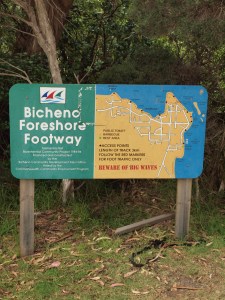
Many of the houses along The Esplanade have beautiful gardens, filled with summers blooms. This was my favourite, opposite the foreshore sign.

20180126_142401


3. Swansea

The 133km drive from Launceston is a joyful trip, particularly when you’re feasting on locally grown cherries from Campbell Town, bursting with sweet, red juice in all their ripe lusciousness.  The traffic is minimal at the end of the holiday season, and before long you’ll emerge from Lake Leake Rd to the town of Swansea.

At the Bark Mill Tavern and Bakery, make sure you sample one of the wonderful butter chicken pies, something I’ll have to try making at home now.  Plus I can’t fault the freshly caught Baramundi, grilled while you wait at the Seafood cafe.

The peaks of The Hazard Range are visible on the opposite side of the Bay, three sheer pink granite mountains rising up out of the sea.  The Peninsula is in fact the site of the Freycinet National Park, several thousand hectares filled with walking trails and pristine beaches.  It stretches all the way up the coastline to the town of Bicheno, some 40km further north of Swansea.  (When I visited in 2014, I walked the trail over the Hazards to the pure white sands of Wineglass Bay, but this time I intend to explore the local coastline.)

Nine Mile Beach is my first pick.

This is just one of the ‘longest and prettiest beaches’ that they brag about in their brochures.  And it is – nine miles long.  Words like glorious come to mind frequently when wandering the beach for a couple of hours, collecting shells.  I think I saw a couple of people in the distance once or twice, but otherwise, it was all mine.

It’s very easy to lose track of how far you’ve walked when faced with this sort of panorama, but really, it’s not a bad place to get lost for a while.

20180124_173924