Blog

2. Liffey Falls

If you head west of Launceston, on the Bass Hwy, it’s a lovely drive to the agricultural town of Deloraine.

This area of pastoral land used to produce oats and corn.  In the 1830’s and 1840’s it had flour mills, colonial cottages and homesteads, and many of the buildings have been preserved and restored to their original beauty.

From there, if you you head south towards Liffey, you’ll find a World Heritage Area Forest Reserve, housing rainforest and giant ferns.   The absence of rain in recent weeks meant that the cascading Liffey Falls were more like a moderate gushing when I visited, but they still looked pretty nonetheless.

I had a picnic there once, many years ago, sheltering from the sun in the cool damp shadows cast by the forest canopy.  There was a guitar serenade afterwards, if you’re paying attention, and remember the details on P.44 of the story.

However, this time I went there with Roods – Callie – with whom I’ve now chalked-up almost 30 years of friendship.  They just don’t make friends like that anymore.

1. Honey

There are Bumble Bees all over Tasmania.

Sure, they might have been introduced, given they’re not native to the island, but who wouldn’t want them bumbling around their garden?  They’re delightful, and rarely aggressive.

These are the round, fat, fluffy ones that fill the balmy summer air with an industrious zzzz as they rattle around the blushing flowers, humming across acres of gardens, and getting drunk on all the nectar.  Did you know they have four wings?

My friends’ garden in Launceston has a stunning array of blossoms, fruit trees and water features, attracting a chattering array of birds, and of course our little pollen collectors.

On my first morning I came across this dusty insect, its entire face buried in the nectar rich stamen.  It could have just fallen asleep.  Clearly it didn’t want to move on from such a feast, and as I watched, it finally just wrapped itself around the anther in a protracted hug.  Mine, it seemed to be saying.  The other bees tried, but they couldn’t even get close.

Bee paradise?

Going South – Tassie series

20180125_181355

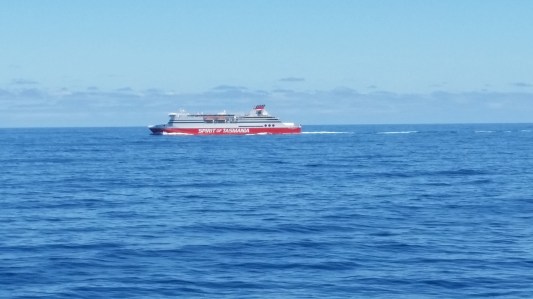
The Spirit moved me at the end of January.

It moved me all the way from Melbourne to Devonport.  Yes, I’m talking about the lovely Spirit of Tasmania, the passenger and car ferry that comfortably conveys people and cargo across the Bass Strait to the delightful Apple Isle.  If, like me, you detest flying, then it’s the trip for you.  Nine hours to sit around drinking tea and strolling the decks.  Bliss.  An excuse to put your feet up, and have a snooze.  Really, you can do whatever you like.  Take your own picnic, or eat onboard.  Have a scone, go to the cinema, listen to live music.  There’s even a Trivia hour.  I drew the line at having my face painted, but whatever floats your boat.  (Sorry.)

The day sailing gives you licence to take time-out from life’s busy schedule, and it (hands-down) beats being jammed into an ergonomically unsound plane seat, in an atmosphere of recycled air so dry that it fills your hair with static and increases the risk of electrocuting your neighbour should you accidentally rub shoulders.  Give me the ocean anyday.  Besides, if we break down, I can always swim, but I sure as hell can’t fly.

My last trip to our southern state was in January 2014, so I was well overdue for a visit, and it didn’t disappoint.

I’m going to be adding a few of the highlights and several dozen photographs, so read-on if you want to come with me on a tour of the island’s east and north coasts.  If you’ve read Like Two Mexicans Dancing you might want to see how some of the places look now, some 25 years later.  Launceston, Liffey Falls, Greens Beach, Dilston.  I managed to retrace my steps to some of those old haunts, and to capture the essence of Tassie.

It’s true that I left a little piece of my heart there when I left in the 90’s, but it’s such a pleasure to go back and look for it every time I return.

20180202_133014

Rinse and repeat

I’m starting to get a garbage obsession.

Perhaps it’s all these shows about recycling your soft plastics, and sorting everything into the right bins?  Perhaps it’s seeing those heartbreaking online videos depicting an ocean of plastic drifting around the globe, like a new, undiscovered Pacific Island? ( The Isle of Polymer.)  Then there’s all the marine life myopically taking a bite at passing morsels as they float-by, thinking that the zip-lock bag you carelessly left on the beach (to be swept away in the next current) is actually a delicious jellyfish. Would you like chips with your PVC?

So, yes, I do try to minimise my waste.  I’m acutely aware of how much I’m contributing to landfill, but when it comes to disposal, I have a bit of a dilemma.  I’m not entirely in-charge of my own destiny when it comes to putting the rubbish out.  Hence my refuse fixation.

Sharing bins with twelve other apartments is problematic from the outset. You can see where I’m going with this.  Already you have at least a dozen different approaches to disposing of household rubbish, from pathological disinterest to apoplectic rage.  I tend to lean more towards the latter category these days, and have been seen ranting and dumpster-diving so many times by one of my neighbours that it’s become our new place to catch-up.  I once found a whole box of (unopened) Maltesers in the top of the wastepaper bin, in perfect condition.  And yes, I rescued them; and yes, they were delicious.  Come ON,  it was an excellent recycling opportunity.  They were still in full cellophane wrapping.  That’s good chocolate going to waste.

I also found a WHOLE television in the recycling bin recently.  Really.  Because a large, complex piece of technological hardware is SO obviously recyclable.  Put there in the cover of darkness, no doubt.  Hard to pinpoint a culprit, but clearly another moment of creative indolence.

Back to Polymer Island then, with its shape-shifting plastic-bottle atoll, and its choking lagoon bobbing with indestructable polyethylene, polystyrene and those imperishable waxed paper cups you see in the hands of coffee drinkers everywhere.  Another invention you wish had never gained traction, like shoulder pads, or quinoa, or anal bleaching.  (Maybe we’ll have to leave that last one for another time.)

What to do about it?  Well, we all know we have a global motherload of rubbish, and definitely insufficient carpet under which to sweep it.  So here’s a thought to ponder.  What about melting down all the plastic bottles, making a massive rocket and sending Trump off in it, to a galaxy far, far away.  Just saying.  Two birds, one stone. Garbage is garbage, whether it’s in a suit, with a comb-over or not.  Like, (a) really smart (idea), if you ask me.

Now I know you’re still wondering about the rinse and repeat title.  Well, all through my English childhood we had milk delivered to our doorstep by the local Milkman, Rodney – two glass bottles a day.  That’s 14 bottles per week –  60 a month, or 62, if we’re being pedantic, for those months with 31 days.

So, a family of four got through 730 bottles per year.

And here’s the kicker – our bottles were rinsed and left on the doorstep each morning, to be collected by the Milkman.  They were all recycled, reused, and refilled.  Even better, my dad still gets the same milk.

The farm in the village continues to deliver, and has been doing so for close to 50 years now.  Several generations of cows have come and gone, and I suspect some of the glass bottles would have needed replacing.   But fifty years.  That would amount to 36,400 bottles of milk.

Isn’t that fantastic evidence of minimising your environmental footprint?  Rodney was definitely ahead of his time.


Saying yes


When I was offered the chance to write a short article for an industry magazine in England, I said yes.  Why?

  • It was a fun diversion
  • It was a one-off
  • My book was given a plug

Plus my Dad used to have a factory that supplied tissue paper products – which is the sort of polite euphemism for which the English are renowned.  Anyway, as such, I felt slightly qualified to voice my tried-and-tested opinion on, erm, toilet paper.  I could already visualise my opening paragraph:

‘I used to delight in telling everyone that my dad sold bog rolls for a living. Indeed that’s how he ultimately made his fortune, supplying this ordinary, but essential, household commodity. Adelaide Mill was the site of his Oldham factory; the place from which he built his empire and retired early.   I remember asking him about their testing methods. The paper had to be sufficiently strong to do the job, but light enough to flush around the U-bend. What exactly happened in the lab, I wondered, thinking of his background in chemistry? He smiled. We’d put it in a jar of water, and shake it up, he said.’

Technical or what?  Well, it did the trick.

Anyway, here are some of the more amusing snippets, about life in the 70’s and 80’s:

‘Back then we had regular Andrex adverts on ITV, depicting a succession of frolicking Labrador puppies. Having snaffled the end of the toilet paper, the puppy would unravel it through the endless corridors and rooms of an uncommonly large British home, to demonstrate its three defining qualities.   Soft, strong and very, very long it may have been, but we had dad’s own brand.  We were never short of toilet paper in our house, and we never had any puppies making-off with the last few sheets.

I grew up in a two storey home, in a family of four, where my dad was the only male in the household. Of course that meant he spent about 15 years-or-so waiting to get into the upstairs bathroom. To be fair, he did have the shower-room downstairs, and that was the one place he could lock the door, sit down, and read the newspaper in peace.’

Not all countries had the same home comforts back then, as I found when I travelled during my student years:

‘In Poland, in the years before the wall came down, they used to have stern faced Toilet Supervisors at the entrances to most public facilities. On arrival they would hand you 2 squares of paper. Two. That’s more than frugal. It’s hard to be creative in the face of such austerity.’

Another favourite memory, as I’m sure my sister would agree:

‘A wet wipe was a bit more exclusive. The moist towelette beguiled us with its compact practicality, and was associated with package holidays and overseas trips. Typically it’d be found on your Spantax airline meal tray, individually wrapped amongst the cutlery, and you’d save it to use later; but by the time you got around to opening it, it had usually desiccated to an unusable crisp square. At some point we had a plastic container of Wet Ones in the medicine cupboard at home.  It was a product that was generally purchased for a summer holiday on an English beach; those halcyon days when you ate gritty sandwiches and got chased by wasps.

I have kitchen paper now, and it’s really useful when the chain comes off my bike and I need something disposable to wrestle it back onto the gear mechanism.  It also makes the perfect wrapping for the smashed smithereens of your only, singularly most favourite insulated glass mug; and the ideal blotter for all the tears you cry as you sweep up the shattered remnants and put them into the bin.’

Even in retirement, my dad still likes to ponder the tensile properties of toilet tissue, and he knows a thing or two about how to run a successful business.  I remember they once taped an advert that was going to be used for radio.  But it was the second version that was most memorable.  Made after a long day in the studio, it was clearly never meant for release.

‘Ever had diarrhoea so bad that what you thought was a fart wound up as a new pair of trousers?  Or ever found bog paper so thin your hand went straight through?  Well now there’s an answer – new super-absorbency Arsewipe.’

I have a copy of the recording on a BASF cassette.  That’s how old it is.  And I still laugh at the punchline:

‘So if you’re full of shit, Arsewipe is here to wipe your cares awayAnd remember, next to Arsewipe everything is crap.’

Going back

It felt like the right thing to do, from the moment I started it all.

I’ve been reconnecting with my past, ever since I decided to write my book.  Not unusual, given I was writing about life in Melbourne in the 1990’s. But at some point I will need to move on.

As we face 2018, I ask myself, Surely I’m done with all that now?  The book is published, I’ve dedicated a few months to marketing and sales, and now the next project beckons.

Yet, from the outset, pieces of the past have continued to materialise, as if I’ve opened a very full cupboard, and things just keep falling out.  The book hasn’t offered closure, as I might have expected with a memoir.  True, it has been a lovely stroll down memory lane, but also a portal to my former self.  Perhaps that’s the risk of writing non-fiction.  It has a life of its own, and with the proliferation of social media, it’s so much easier to connect the dots now, to be found.  The past refuses to stay put.  It can time travel from right across the globe, it can find you from crumbs that you’d inadvertantly left, it can speak to you after decades of silence.

At the local radio station in Manchester I spoke with a random person who picked up my phone call in August.  It turned out that he’d lived in Melbourne briefly, in the 90’s, and had seen the band (The Fish John West Reject), been to several of their gigs in fact; and yes, he was still in touch with the drummer, Graham.  That’s the sort of thing I mean.  Unexpected. Revelatory.

So, yes, it’s true that it’s difficult to move on.  I won’t deny that.  The story has been part of my life for a year;  I’ve lived it day after day, and then finally realised a long held dream, to see it in print. What a rush.  What a sense of achievement.  But after such a high, there is only one other trajectory.

I’ve read other writers’ experiences of post-publishing blues.  Whilst filled with the joys of sharing your creation, you mourn the loss of your daily visits to that world of your imagination. It feels like you’ve lost a friend.

I can sense there’s more to come from this story. I’m not sure how to explain it.  When you write something you just know when it’s finished, when it all feels right, when it flows.  I said everything I could about that time.  It felt finished.

But I don’t feel it’s really had chance to be discovered yet.  It’s one of many books on Amazon. It’s just a pebble on a beach.  Perhaps if I offer some context, it might help you to understand.  During my latest research, I read that there were over 786, 900 barcodes issued in the US alone during 2016.  That’s the number of books flooding the market that year, and it didn’t even include ebook numbers.  If that was a mound of books, imagine trying to find mine in it.  That’s what I’m talking about.

I have done what many people only dream of doing – writing and publishing a book.  Nothing can diminish that achievement.  But it’s up to me to ensure it has legs, that it continues to get into the right hands, that it doesn’t get buried and forgotten.

That portal I opened hasn’t closed yet.

Yes, it matters

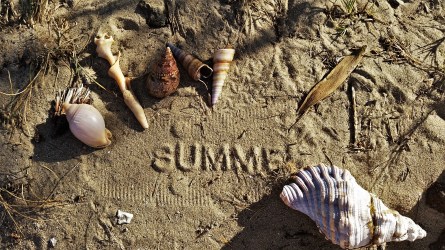
20171221_122345There are so many distractions at this time of the year.  I find it difficult to get into my regular writing routine when the sun is shining and beaches are beckoning.  Summer isn’t the only culprit, because there are also Christmas lunches and drinks, garden parties and bbq’s.

So, I’ve taken time-out to focus on my photography until the fun is over, after which I intend to lock myself away again with the keyboard.

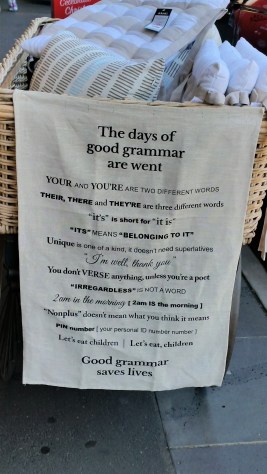
I loved this teacloth summary, in support of spelling and grammar – seen out on the street, amongst the Christmas gifts.


Creativindie.com – why you should know about this

At the start of my full-time writing journey, in January 2016, I came across an online site called Creativindie.  It was a blog that had been set up by Derek Murphy, a book designer who was in the process of completing his PhD in Literature.  He’d accumulated alot of knowledge over the years and he was keen to share this with other self-publishing writers like myself.

For free? Really? What was the catch? Did I need to be concerned?

It was one of those random discoveries you make sometimes.  I really can’t remember how I found the site.  But I knew this was the real deal after a few emails.  Derek replied to my enquiries in person, and gave me some really helpful information.  Plus I could see that he wasn’t just pushing products, even though he had plenty to sell.

This was someone who was genuinely interested in supporting other writers.  Yes, he was setting up his own business, and he had books for sale. Of course.  But he also gave away alot of things for free.

Amongst his resources, there were the basics, like how to set-up your book template, but also publishing-ready tips such as how to set up an Author platform.  There  were details about DIY book covers, how to set up an Amazon profile, and endless marketing tips.

I don’t know how I would’ve completed my book without his ongoing advice, and the regular resources he uploaded to his site. I was fortunate enough to catch him while he was still studying, when he still had the time to design my book cover – and for that, I was very happy to pay him.  (I credit him inside my book.)

Now he spends his time writing and travelling – you can read about the writing retreats he offers in castles that he rents all over Europe. Yes, castles.

He somehow keeps churning out books, maintains his blog, sends out emails, and produces regular Youtube videos.  I often wonder if he ever sleeps.

I noticed that he’s just reached a million views in Youtube, so he’s kind of celebrating that.  We’re all with you there, Derek. Nicely done.

So, if you haven’t seen any of his videos, or dipped into the enormous amount of information he’s collated at his site, then why not take a peek.

I’m more than happy to champion his site. What a great business head.  What incredible altruism. What a legacy to leave.


YouTube

Since I returned from England, I’ve been getting to know Windows Movie Maker, amongst other things, and have now finally been able to upload the BBC radio interview, from July 2017.  I’ve crafted it into something you can watch as a short (ten minute) movie.

So, here it is. . .  a mini movie, with a mini Me.


Bark

The assortment of trees in my local park offers a fascinating and tactile experience. Their bark, their skin in effect, is as different and individual as any other living thing; evidence of their struggle and their determination to shoulder the elements.

Whenever I go for a walk, I place a hand on the gnarled bark of these living monuments and take a moment to feel my own insignificance.  I look at them reaching into the skies, and imagine their roots creeping down through the soil; making a mirror image of themselves, making their depth equal their height, anchoring themselves to this earth.  It feels as if nothing could shake them off.  They seem immovable, permanent.

Striking and colourful, the textures are only fully realised underneath my fingertips, like a rugged braille communication from these evolving monoliths.  To me, they are organic art, evidence of a slow transformation, of a long journey through the seasons and the years.  I like the feel of them, the dependability of their presence.

Basking in the light, or allowing their graceful limbs to yield and sway in the capricious winds, they are the sentinels of our Garden State, reflecting the whims of Melbourne’s inconstant weather.

Some of them nod and wave in the high currents, others stand impassive and immovable in their leafless winter wardrobe.  But it’s the low palms that catch my eye, sweeping their fronds across the dusty ground, forming a series of cross-hatched scars like unreadable messages.  Beneath their fringed edges they’ve hollowed out a series of pockets in a perfect parabola, their branches scraping at the dirt that tethers them, scooping at the surface as if clutching for a way out of it.

It’s easy to assign a character to each tree, to assume their sentience, to imagine that they radiate stoicism and even safety.  Perhaps their size inspires such lofty beliefs, giving ideas of shelter and protection; but it’s when my skin touches bark that I’m reminded they are our guardians on this turbulent spinning planet. I admire how they persevere, how they endure unpredictable conditions with such grace.

At times like this I wish I could paint, but I have to settle for other ways to capture their magnificence –  reducing them to a single dimension with just the lens of a camera, the refraction of light, and a spectrum of colour.